The firm
Two partners, a manager, four seniors and seven article assistants look after about 120 clients: statutory and tax audits for small manufacturers and traders, monthly GST and TDS compliance, income-tax returns and company incorporations.
What made the work hard
- Every client's GST month was tracked in a spreadsheet nobody fully trusted.
- Documents arrived by WhatsApp, email and pen drive, and someone had to chase each one.
- Fees for monthly compliance hadn't changed in years, though some clients took twice the time of others.
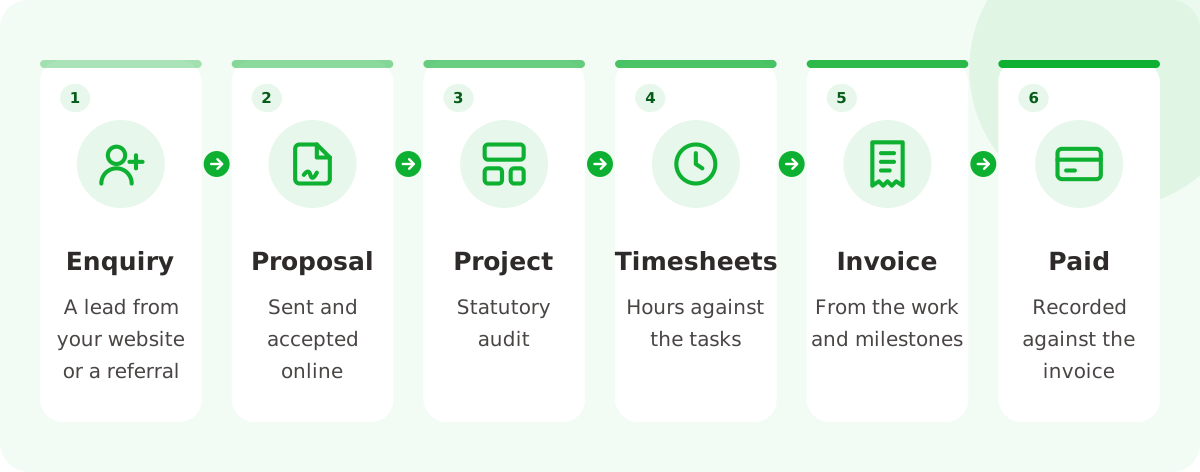
How they set up MSMEPulse
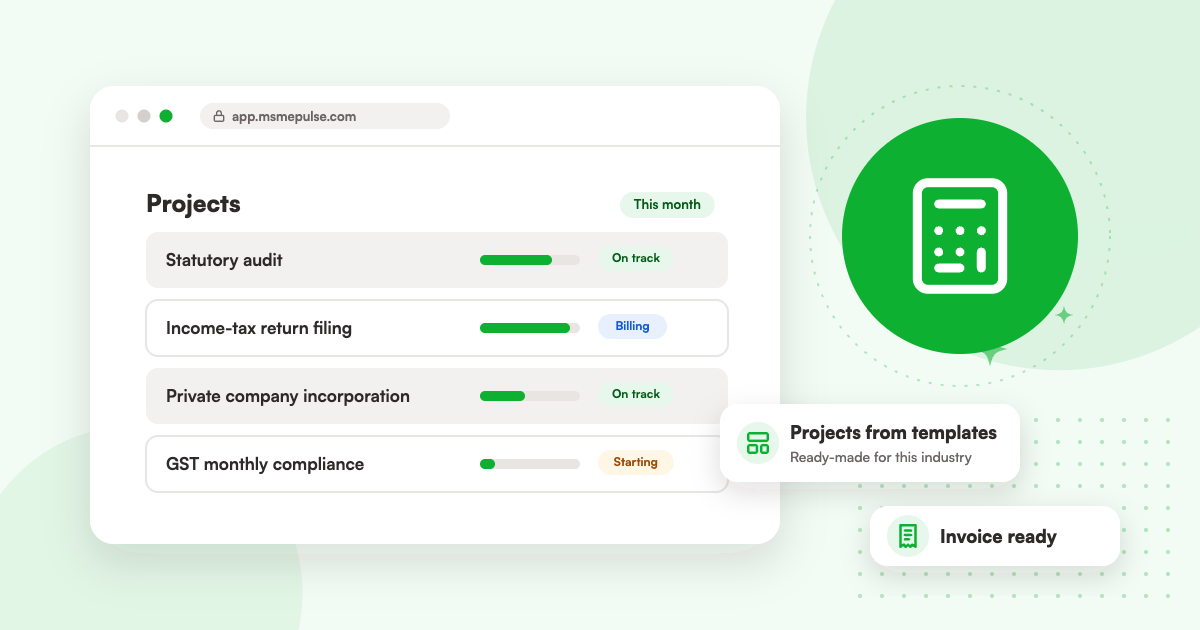
- Chose Chartered Accountancy & Tax Practice at signup, so its project templates were ready on day one.
- Started a GST monthly compliance project for every GST client, and statutory audit projects at year-end.
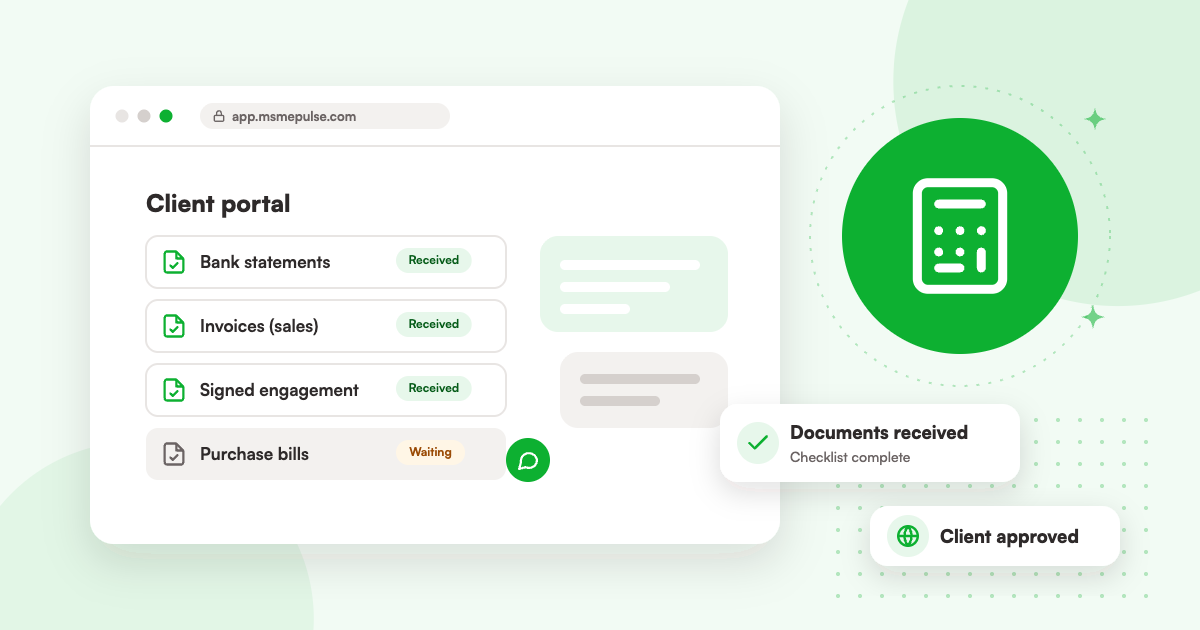
- Turned on the client portal so clients upload documents against each project's checklist.
- Asked the team to log time daily against each client's project.
The templates for Chartered Accountancy & Tax Practice in MSMEPulse: Statutory audit, Income-tax return filing, Private company incorporation, GST monthly compliance, TDS quarterly returns, GST annual return (GSTR-9 and 9C), Tax audit (Form 3CD), Internal audit (quarterly), Monthly bookkeeping, Annual ROC compliance, Monthly payroll (India), Business valuation report, Financial due diligence, Business plan and financial model.
A typical month
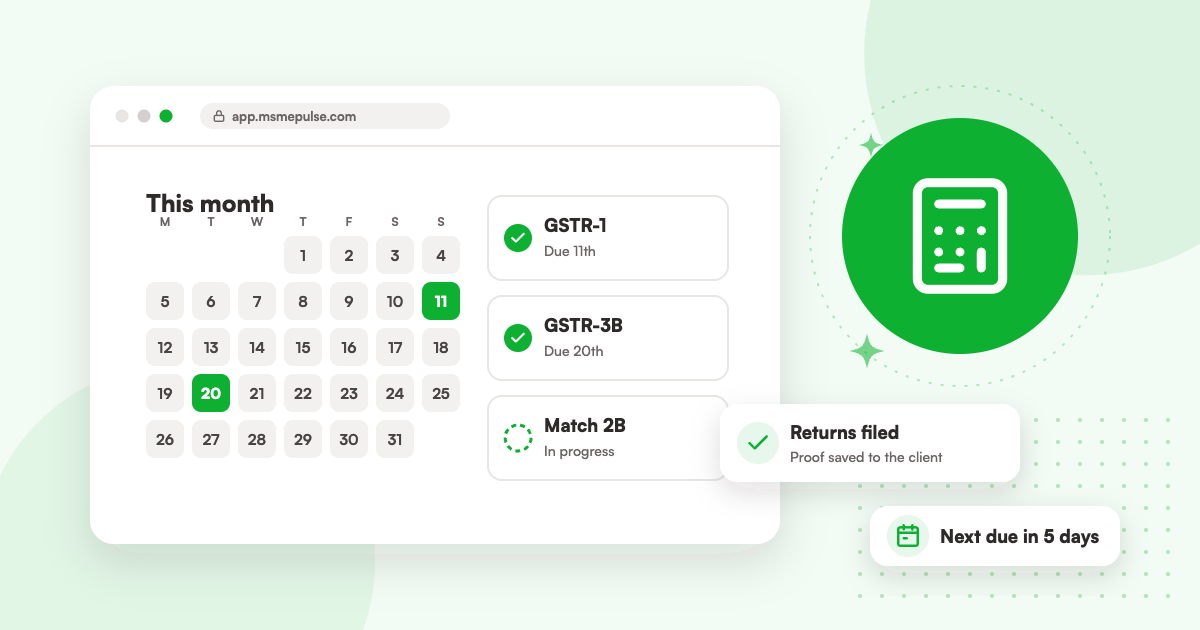
On the first working day, the manager starts the month's GST projects for all clients. Clients see a checklist in their portal: sales register, purchase invoices, bank statements. By the 8th, the board shows which clients are still missing documents, and the team chases only those. GSTR-1 and GSTR-3B are ticked off as they're filed, and the monthly fee invoices go out with the right GST and the firm's SAC code.
What changes
- One board shows every client's status, instead of a spreadsheet updated by hand.
- Clients upload documents against a checklist, and late items are visible early.
- Time logged per client gives the partners real data for fee discussions at renewal.
See it with your own industry
Sign up, choose your industry, and install sample data from Settings. You'll get a realistic business like this one, with projects from your industry's templates, clients, timesheets and invoices, to explore before adding your own records.