If you provide professional or technical services in India, many of your clients deduct TDS before paying you, typically under section 194J for fees for professional or technical services. The deduction is part of your income, and you claim it against your tax. But only if it reaches the tax department under your PAN.
Rates and thresholds change from time to time. Check the current rules for your situation.
What can go wrong
- The client deducts but doesn't deposit the TDS, or files their return late.
- The client uses the wrong PAN or the wrong section.
- The amount in Form 26AS doesn't match what you recorded.
- You never record the deduction, so the invoice looks part-paid forever.
Each of these means money you've earned may never be claimed, or a long correction process at year-end.
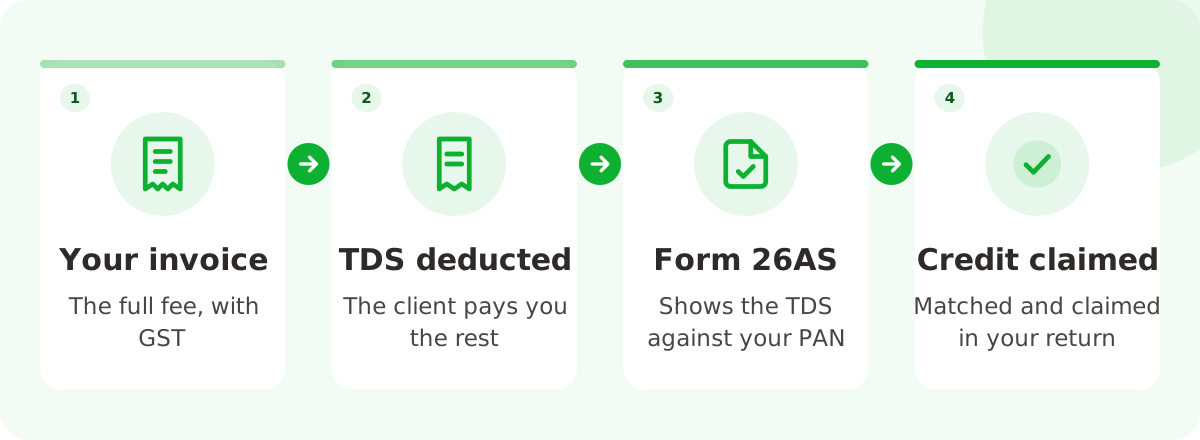
Record TDS when you're paid
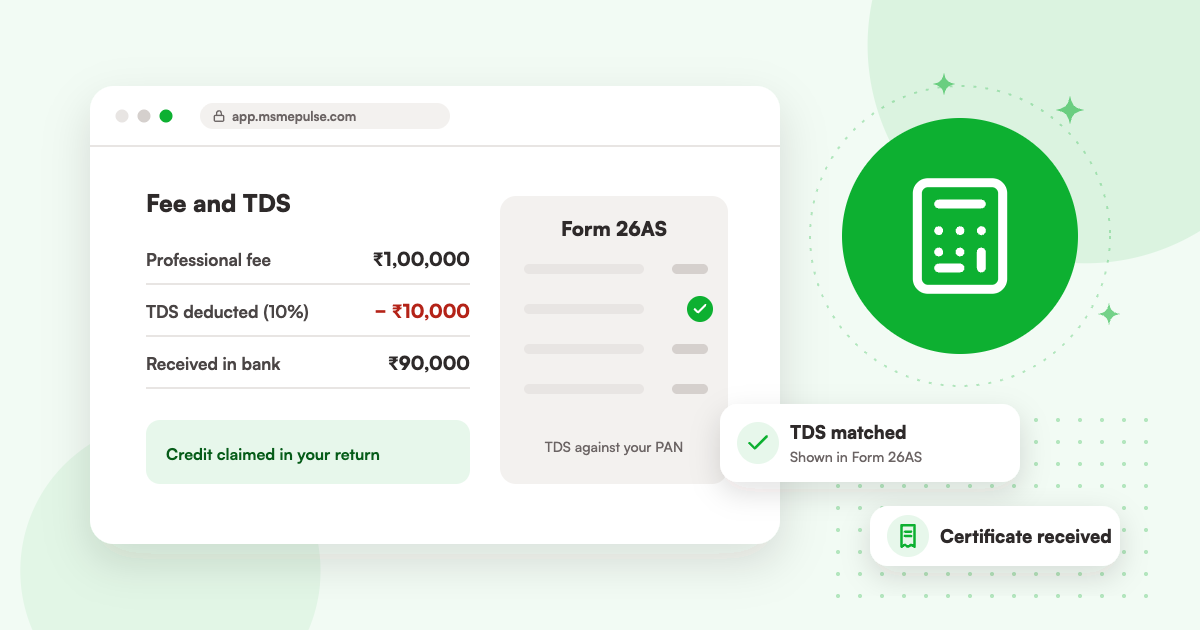
When a client pays an invoice of ₹1,18,000 (₹1,00,000 plus GST) and deducts ₹10,000 TDS, record:
- the payment received: ₹1,08,000;
- the TDS deducted: ₹10,000, and the section.
The invoice is then fully settled, and your records show exactly how much TDS each client should have deposited.
Note: TDS is usually calculated on the fee excluding GST, where GST is shown separately on the invoice.
Reconcile every quarter
After each quarter's TDS returns are due, download Form 26AS (or the Annual Information Statement) and compare it with your records, client by client:
- Matched: done.
- In your records but not in 26AS: ask the client to check their return and the PAN they used.
- In 26AS but not in your records: find which payment it relates to.
Quarterly reconciliation means problems are fixed while the client still remembers the payment, not a year later.
Ask for TDS certificates
Clients should issue Form 16A for the TDS they deduct. Keep a list of certificates due and received. Missing certificates often point to TDS that hasn't been deposited.
How MSMEPulse helps
When you record a payment in MSMEPulse, you can enter the TDS deducted and the section. The invoice is marked paid, your reports show TDS by client and quarter, and reconciling against Form 26AS becomes a quick comparison instead of a search through bank statements.