For a company secretary or CA firm looking after many private companies, the year is a calendar of recurring filings. Each one is simple. Missing one means additional fees for the client, and an awkward conversation.
This is a general guide for private limited companies with a financial year ending 31 March. Requirements depend on each company's situation, and dates are sometimes extended. Always check the current rules on the MCA portal.
The annual calendar
April
- Form MSME-1 for the half-year October–March, where the company has dues to micro and small enterprises outstanding beyond 45 days.
June
- DPT-3, the return of deposits and outstanding money not considered deposits, by 30 June.
By 30 September
- Board meeting to approve the financial statements and the board's report.
- Annual General Meeting, within six months of the year-end.
- DIR-3 KYC for each director.
Within 15 days of the AGM
- ADT-1, where an auditor is appointed or reappointed.
Within 30 days of the AGM
- AOC-4, the financial statements.
Within 60 days of the AGM
- MGT-7 or MGT-7A, the annual return.
October
- MSME-1 for the half-year April–September.
Throughout the year
- Board meetings: at least four a year, with no more than 120 days between two meetings (lighter requirements apply to some small companies), with notices, agendas and minutes.
- Event-based filings within their own deadlines, such as DIR-12 within 30 days of a director's appointment or resignation, and MGT-14 for certain resolutions.
Running it for many companies
The filings are the same every year. What changes is the client's situation: a new director, a share allotment, a change of auditor. A good practice:
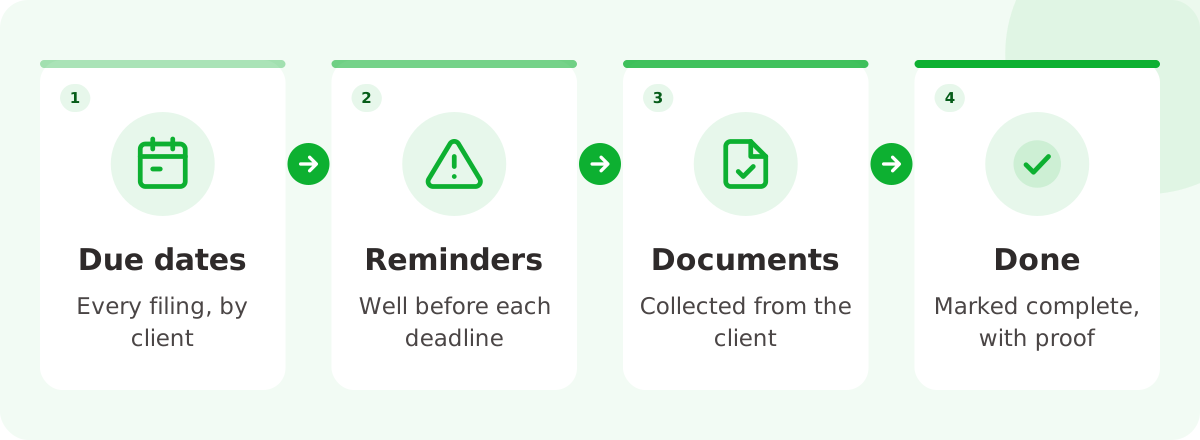
- Set up each company's year as a project with the standard filings as tasks and their due dates.
- Add event-based filings as they arise, with their own deadlines.
- Request documents early: audited accounts, shareholder details, director details.
- Review weekly which companies are behind.
Pricing the work
Annual compliance is often priced as a fixed fee. Track the time each company takes: some need far more work than others, and the fee should reflect it.
How MSMEPulse helps
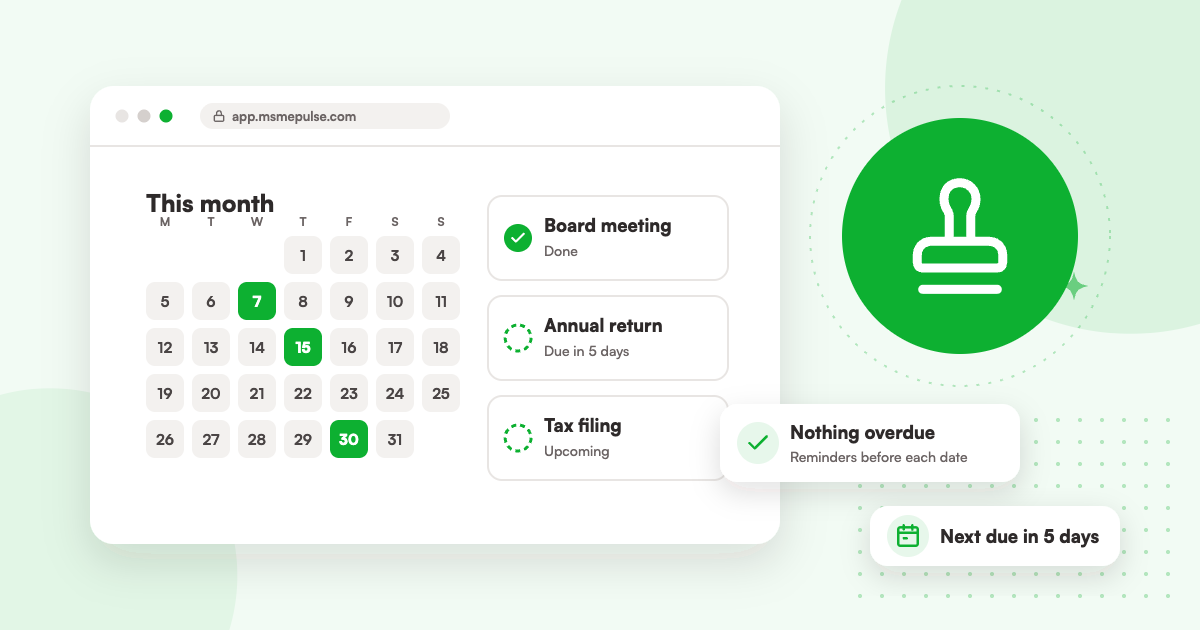
MSMEPulse includes project templates for annual ROC compliance, board meetings and director changes, each with tasks, deadlines and document checklists. Start one for each client company and see every company's progress, and what's due next, across all your clients.