Ask any accountant or company secretary what delays their work, and the answer is the same: waiting for documents.
The bank statements arrive in parts. The fixed asset register is "being updated". The board resolution needs one more signature. Meanwhile the deadline stays where it is.
You can't control your clients. You can make it much easier for them to do the right thing.
Ask once, clearly
A vague request ("please send your documents for the audit") gets a vague response. A clear one gets results:
- A list, item by item: "Bank statements for all accounts, April to March", "Fixed asset register", "Loan statements".
- Who it's from, if the client has a team: the accountant, the HR person, the director.
- A date for each item, based on when you'll need it, not one date for everything.
- Which items are essential and which can follow.
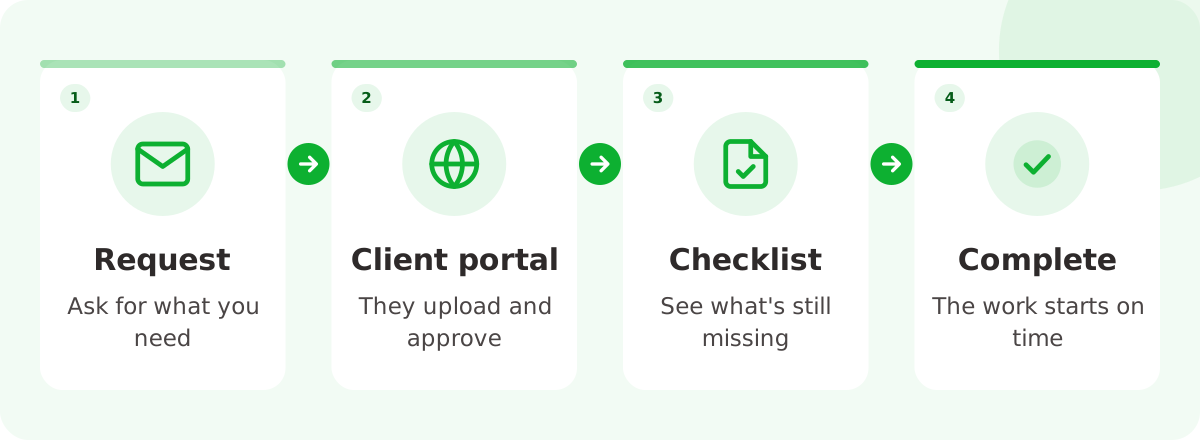
Give them one place to send it
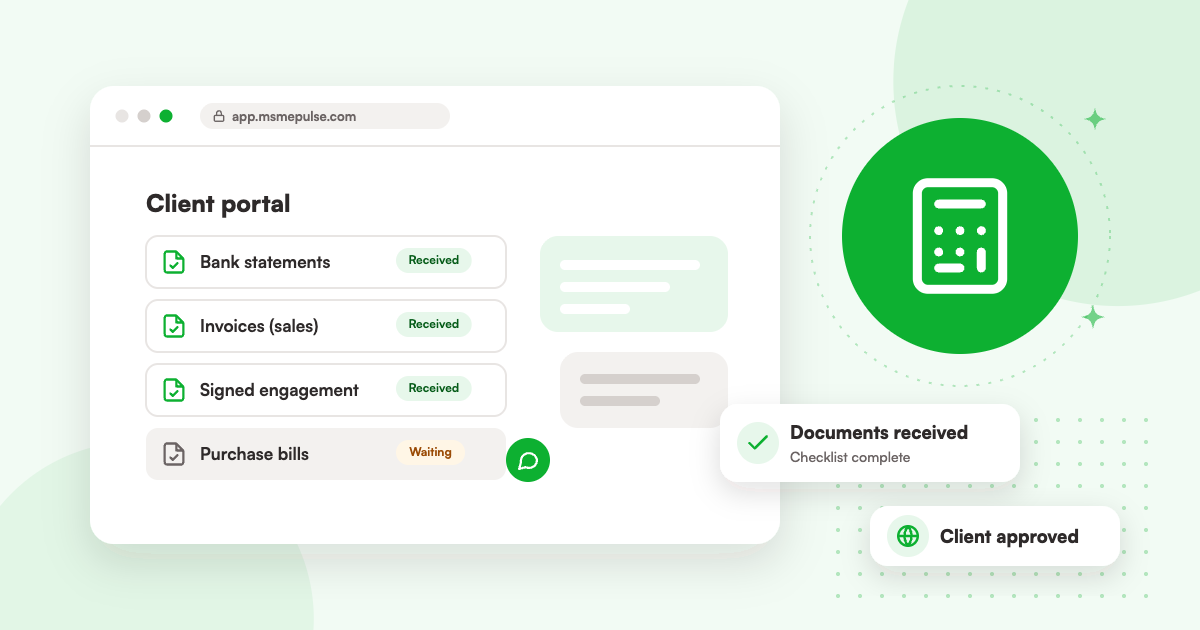
Email attachments get lost, sent to the wrong person, or arrive as forty separate messages. A single place where the client can upload each document against the item on the list:
- shows them what's still missing;
- shows you what's arrived, and when;
- keeps everything with the engagement, not in someone's inbox.
Track it like work
Each document is a small task with a due date. When something is late, you see it straight away, not the day before the deadline.
Distinguish between:
- Received: it's arrived.
- Verified: someone has checked it's complete and correct.
Many delays come from documents that arrived but turned out to be incomplete.
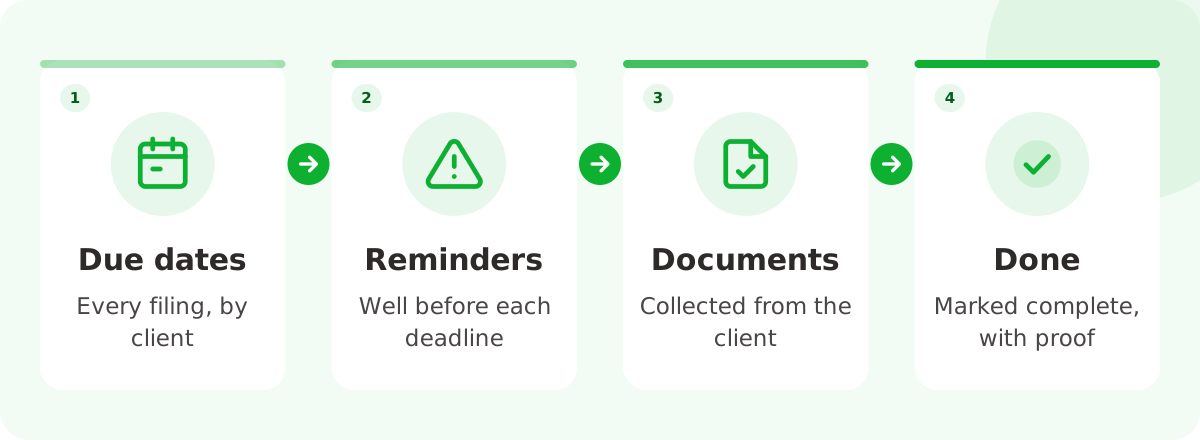
Make the consequence visible
Be clear, politely, that late documents move the timeline:
"We'll begin fieldwork once the trial balance and bank statements are received. Each week of delay moves the audit report by a week."
Most clients respond well to clear expectations.
Use the same checklist every year
Recurring work (audits, returns, annual filings) needs the same documents every year. Keep a standard checklist for each type of engagement, and refine it as you learn what each client tends to forget.
How MSMEPulse helps
Every MSMEPulse project template for accounting and secretarial work comes with a document checklist: which documents, from whom, by when, and which are compulsory. Clients upload documents against each item in their portal, you mark them received or verified, and a milestone can't be completed while its compulsory documents are missing, unless a manager overrides it with a reason.