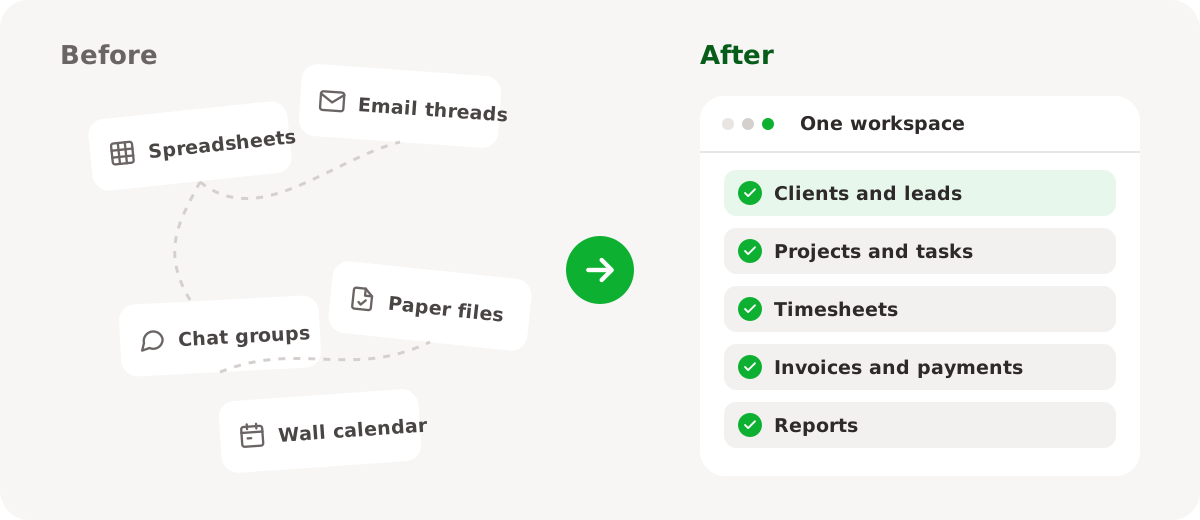
Most small firms run on spreadsheets: one for clients, one for projects, one for time, another for invoices, and a folder of templates for proposals. It works, and it costs nothing. Or so it seems.
The cost doesn't show up as a bill. It shows up as hours, and as money that slips through the gaps between the sheets.
Where the hours go
Take an ordinary month and count the time spent on work that only exists because the information lives in several places:
- Copying. Hours from the timesheet into the invoice. Client details from the client list into the proposal. Amounts from invoices into the accounts.
- Checking. Is this the latest version of the sheet? Did anyone log time to the wrong project? Does the invoice total match the timesheet?
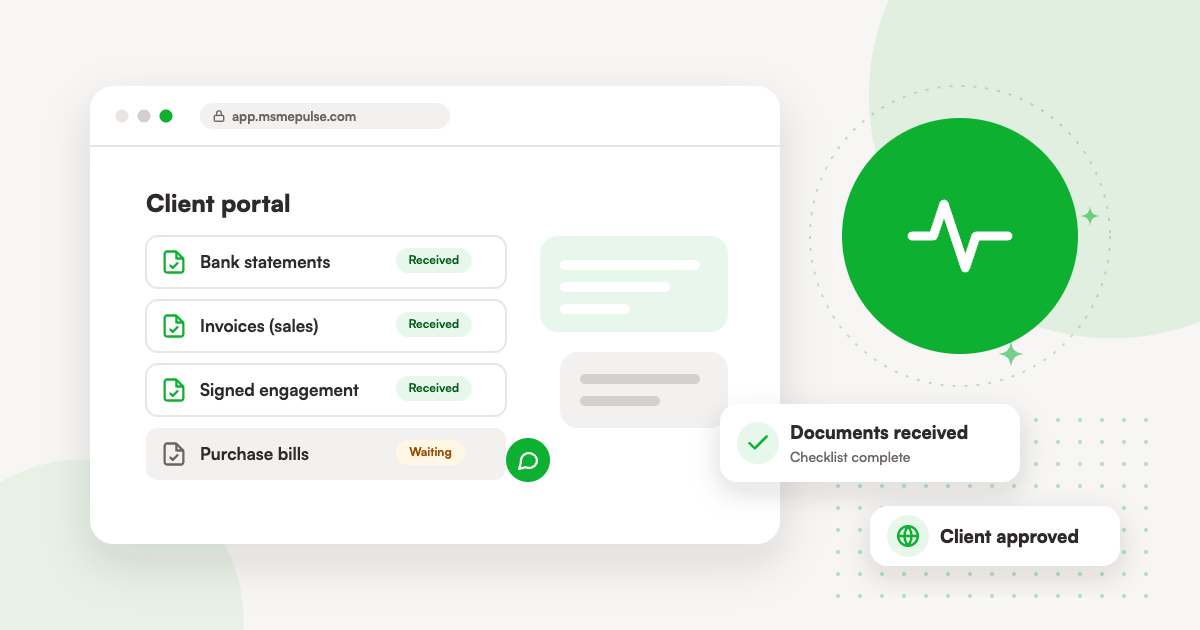
- Chasing. Who hasn't filled in their timesheet? Which client hasn't sent their documents? Which invoices are overdue, and has anyone followed up?
- Assembling. Pulling numbers together for a month-end review, a partner meeting or a bank.
Ask each person on the team to estimate their own hours for one month. Multiply by their cost per hour. For many firms the total is more than they'd pay for software, every month.
Where the money slips
The hours are the visible cost. The bigger one is usually the money you never knew you lost:
- Unbilled time. Work logged late, logged to the wrong project, or never logged at all.
- Missed milestones. A stage of work finished, but nobody raised the invoice for weeks.
- Scope creep. Extra work done for a fixed fee because nobody compared hours spent against the budget until the end.
- Slow collection. Invoices that go out late get paid late, and overdue ones nobody notices don't get chased.
None of these is anyone's fault. They happen because no single place shows the whole picture.
A simple test
Answer these from memory, without opening a file:
- Which projects are over budget right now?
- How much work has been done this month that hasn't been invoiced yet?
- Which clients owe you money, and for how long?
- Who on your team is overloaded next week?
If the honest answer is "I'd have to check several sheets", the firm is working harder than it needs to.
What changes with one system
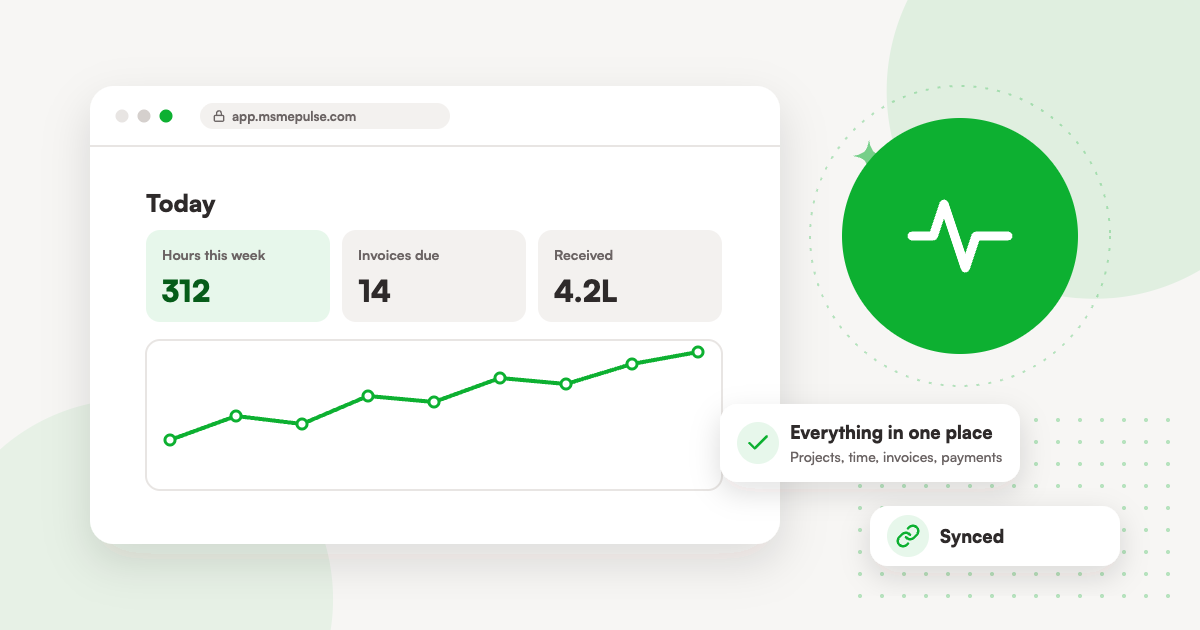
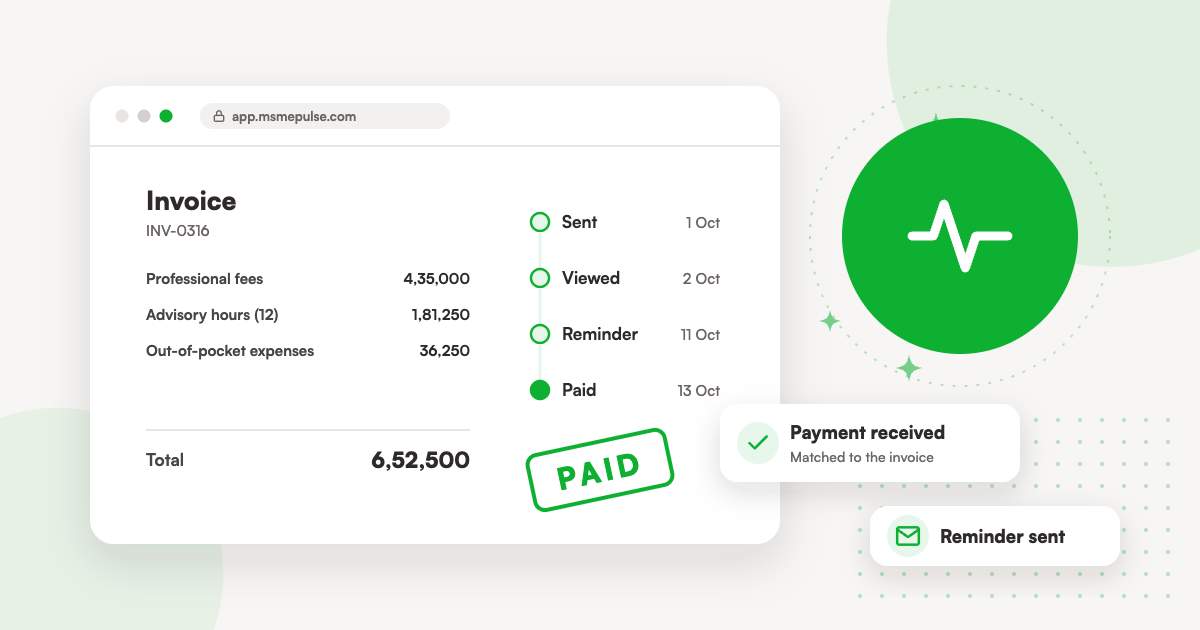
When clients, projects, time, invoices and payments live in one place, the copying disappears: time becomes an invoice line, a finished milestone becomes an invoice, a payment updates the client's balance. The checking gets easier because there's only one version. And the chasing can be done by the system: reminders for missing timesheets, overdue documents and unpaid invoices.
How MSMEPulse helps
MSMEPulse brings clients, proposals, projects, timesheets, invoices with GST, payments and payroll into one place, built for service firms in India and Singapore. You can try it with sample data from your own industry before entering anything of your own, and see your firm's numbers on one screen from the first week.