Ask any team what they dislike most about their job, and timesheets will be near the top of the list. Yet without them you can't bill fairly, price the next job well, or see who's overloaded.
The aim isn't perfect timesheets. It's timesheets that are good enough, filled in on time, without resentment.
Why timesheets fail
- They're filled in on Friday afternoon from memory. By then, Monday is a blur.
- They're tedious. Choosing a client, then a project, then a task, then typing a note, for every entry.
- Nobody sees the point. If timesheets disappear into a spreadsheet and never come back, people stop caring.
- They feel like surveillance. If time is used to blame, people pad it.
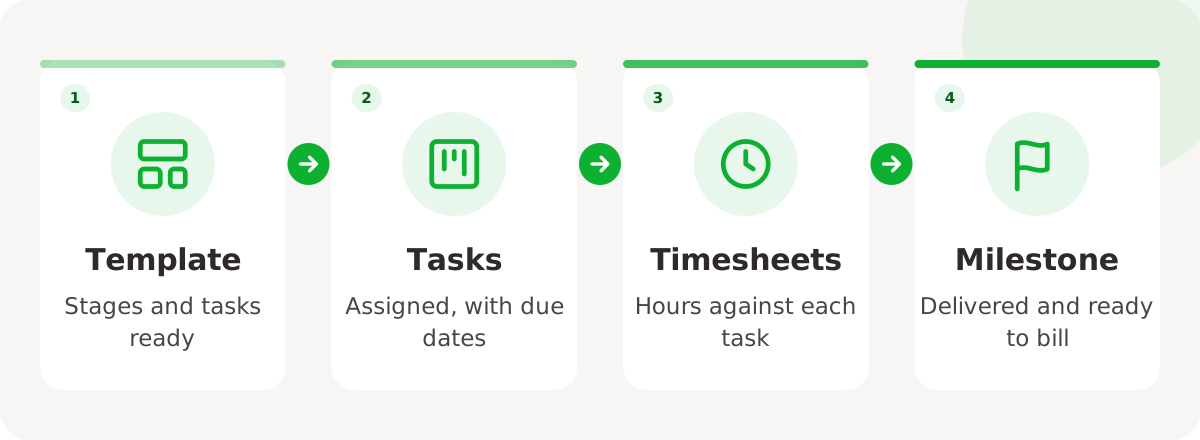
Make it quick
- A timer for people who like to start and stop.
- A weekly grid for people who prefer to fill in once a day.
- Only their projects in the list, not every project in the firm.
- Works on a phone, for people on site or with clients.
Make it routine
- Fill in time daily, even roughly. Five minutes at the end of the day beats an hour on Friday.
- Submit weekly, approve weekly. A manager approval each Monday keeps billing on track.
- Send automatic reminders for missing days, rather than personal ones.
Show why it matters
Close the loop. Share how time is used:
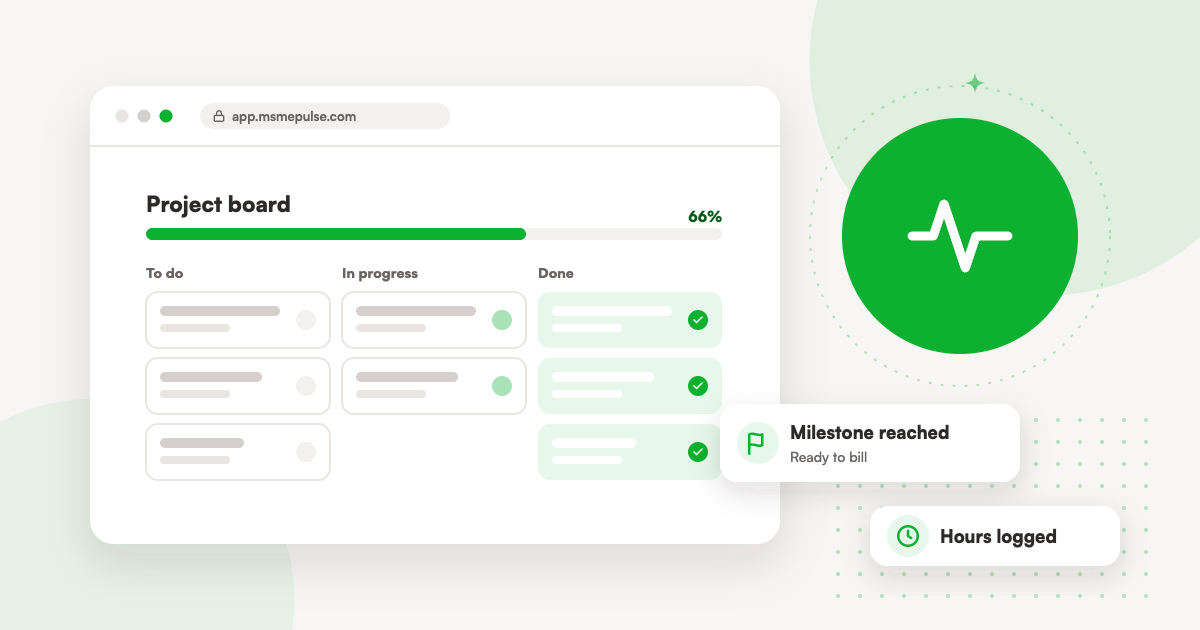
- Hours on a project against its budget, so the team sees when work is running over.
- Utilisation, framed as workload, not performance: "Ravi has been above 45 hours for three weeks" is a planning problem, not a discipline problem.
- How accurate timesheets made last month's invoice right first time.
Keep it fair
Not every hour is billable, and that's fine. Internal work, training and admin are real work. Track them honestly so you can plan for them.
How MSMEPulse helps
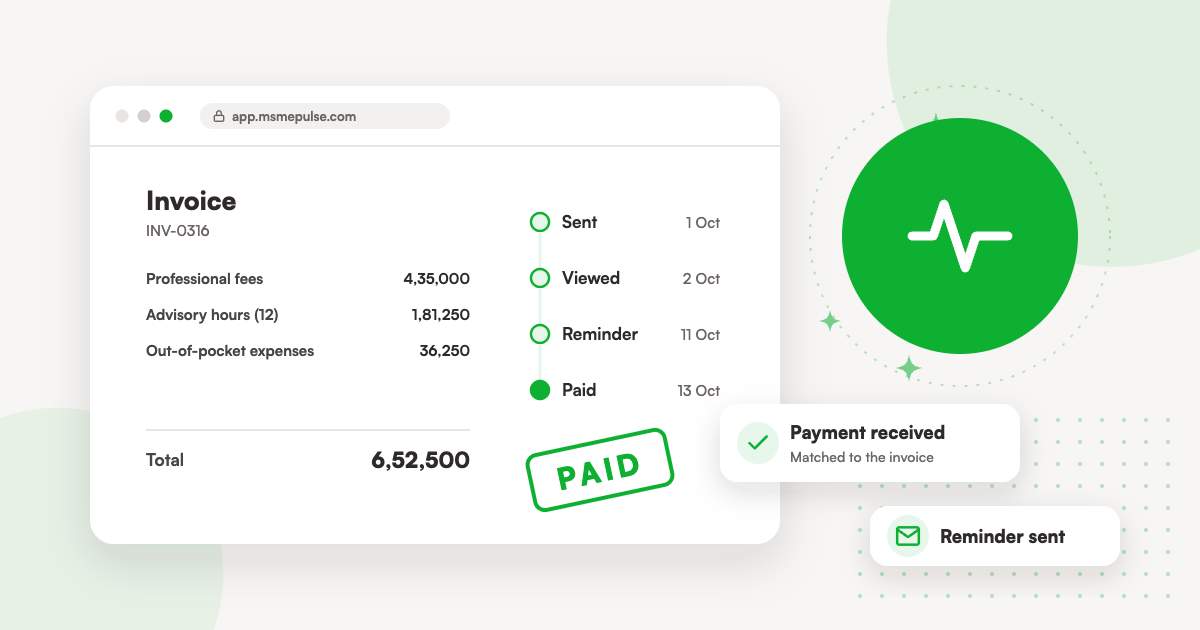
MSMEPulse has a timer and a weekly timesheet that show only the projects each person works on, and work on a phone. Weekly submission and approval keep time ready to bill, and approved time turns into invoice lines in a click. Managers see hours against each project's budget as the work happens.