Valuation reports and financial due diligence are high-value, deadline-driven work. They're also prone to quietly growing: one more scenario, one more entity, one more round of management questions. Without care, a well-priced engagement ends up barely profitable.
Agree the scope in writing
The engagement letter should say, at least:
- Purpose of the valuation or due diligence: fundraising, acquisition, regulatory, tax or reporting.
- Valuation date or period covered.
- What's included: entities, business lines, methods, number of scenarios.
- What's excluded: legal, tax, IT or commercial due diligence, unless agreed.
- Information needed, and by when.
- Fee and payment stages.
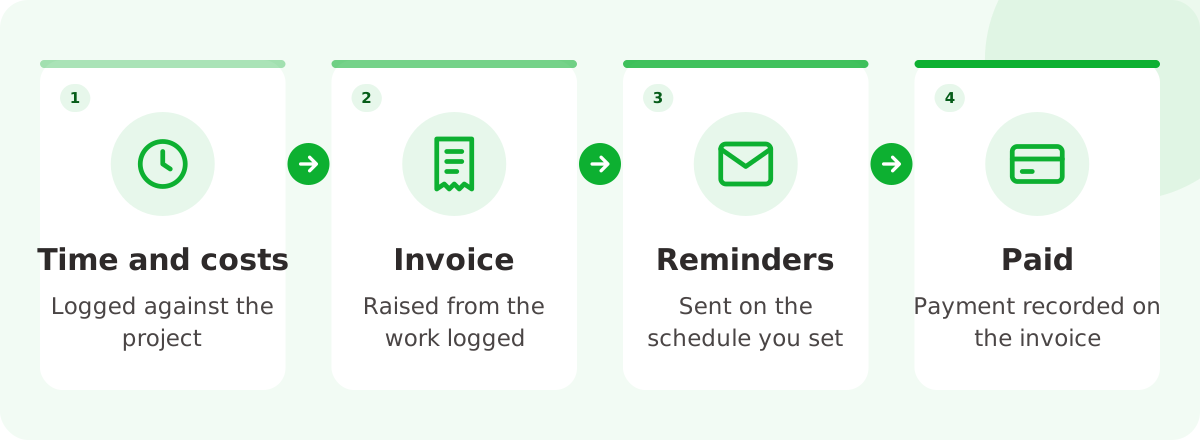
Stage the fee
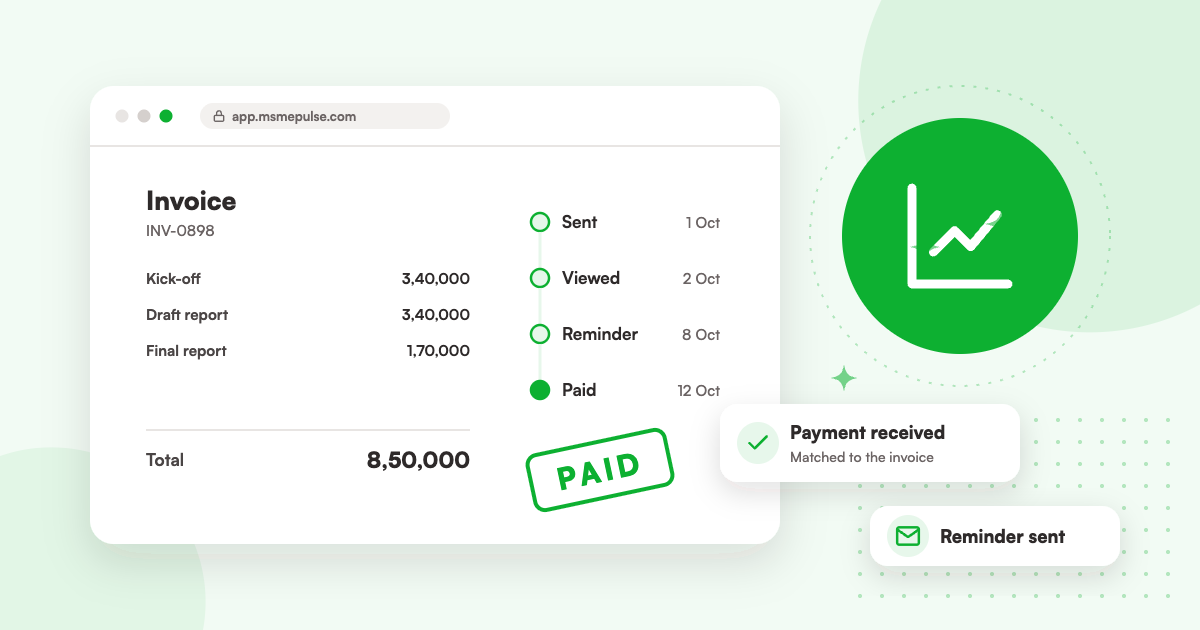
Long engagements tie up senior time. Stage the fee:
- a share on signing the engagement letter;
- a share on the draft report;
- the balance on the final report.
This keeps cash coming in and reflects the work done if the deal stalls.
Request information on day one
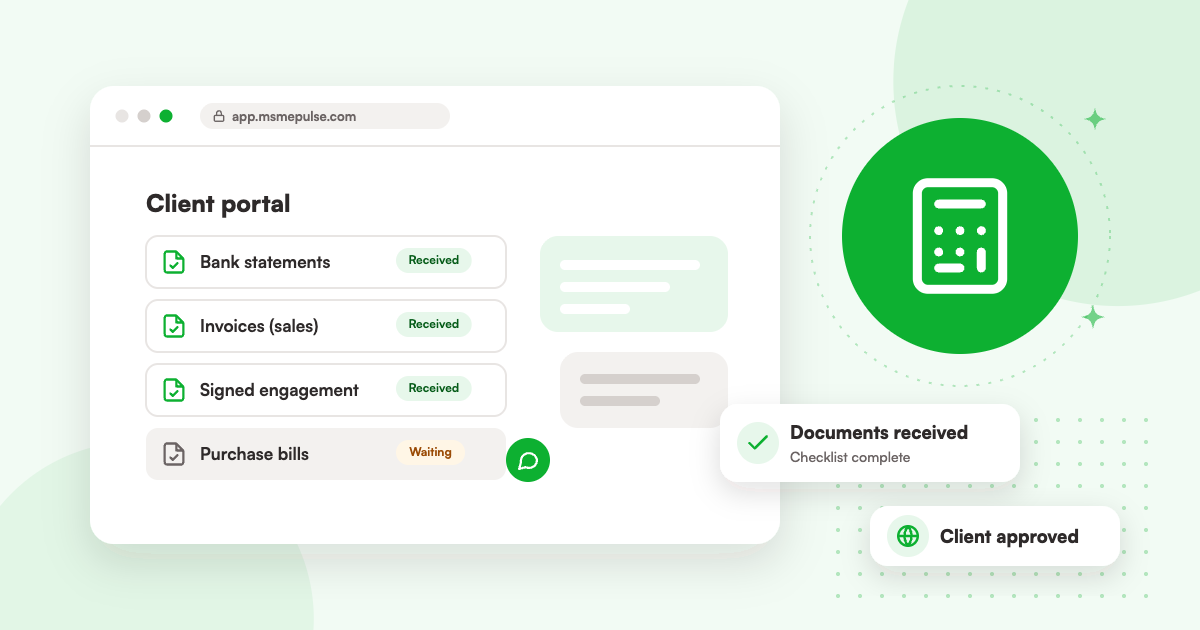
A clear information request list, sent with the engagement letter, saves weeks. Track each item: requested, received, reviewed. When the data room is incomplete, the timeline moves, and the client should know it.
Track time against the budget
Estimate hours by stage and by person. Review weekly:
- Which stages are running over?
- Is the extra work within scope, or a change?
When something is a change, raise it early, with an estimate, before doing the work.
Document management questions
Management meetings generate questions and answers that end up in the report. Keep them with the engagement, not in individual inboxes, so the team works from the same information.
How MSMEPulse helps
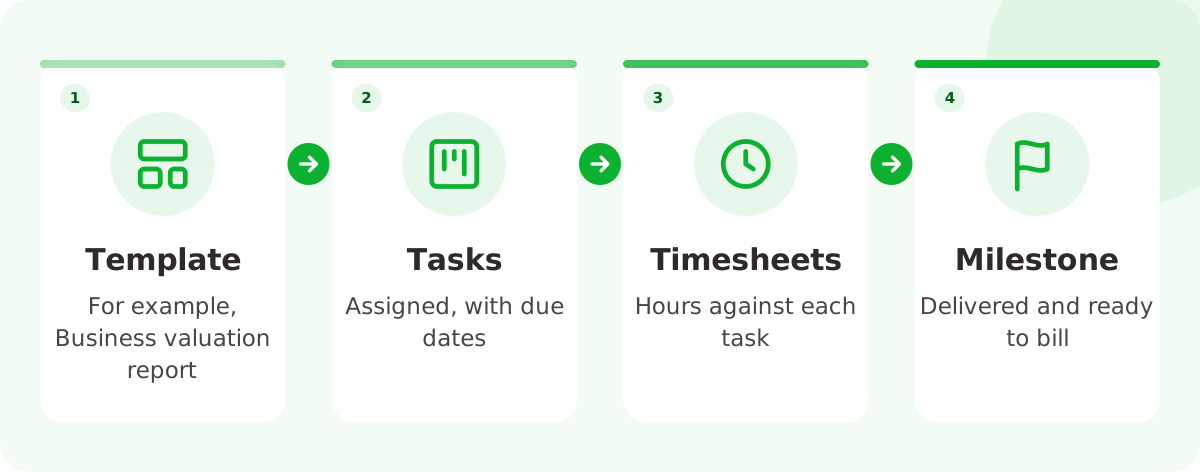
MSMEPulse includes templates for business valuation reports and financial due diligence, with staged milestones, tasks by role and an information request checklist the client completes in their portal. Time logged against each stage shows when an engagement is running over budget, and milestones become invoices when they're completed.