Trademark and patent work is unusual: a single file can run for years, with critical deadlines months apart. Miss one, and a client's rights may be lost. Most IP practices have a docketing spreadsheet. The question is whether anyone looks at it at the right time.
Deadlines depend on the jurisdiction and the type of application, and can change. Always check the current rules for each office.
The deadlines that matter
For trademarks, typically:
- Reply to the examination report within the time the registry allows.
- Opposition period after the mark is advertised or published.
- Registration and the certificate.
- Renewal, before the registration expires.
For patents, typically:
- Complete specification within twelve months of a provisional application.
- Request for examination within the prescribed time.
- Responses to examination reports.
- Renewal fees each year.
Make each file a project
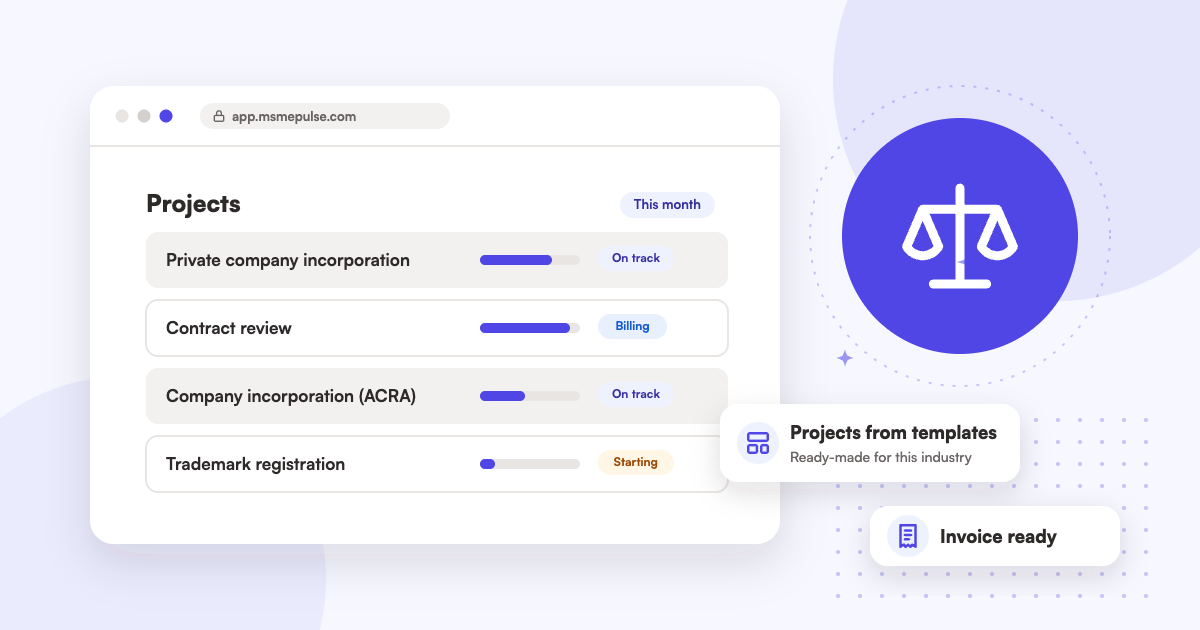
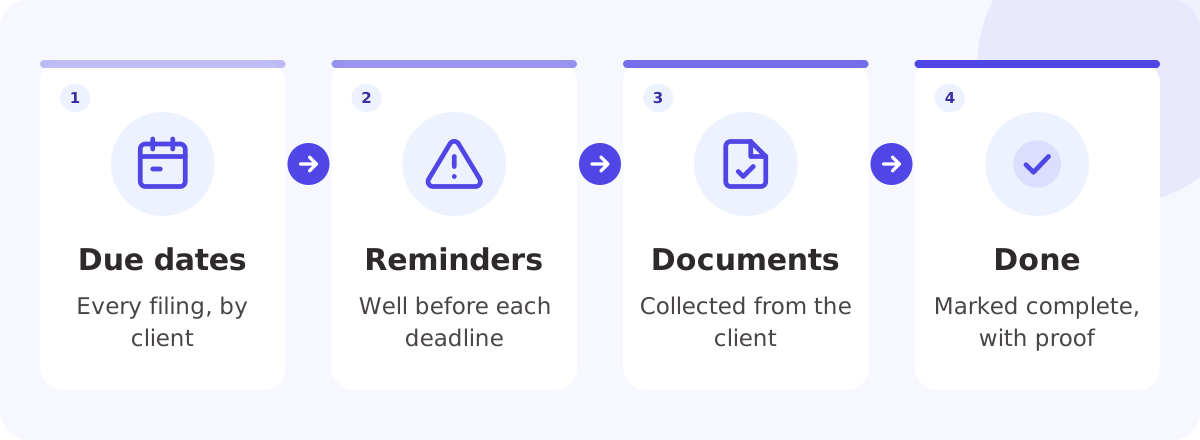
Treat each application as a project with its own timeline:
- tasks for each step, with due dates calculated from the filing date;
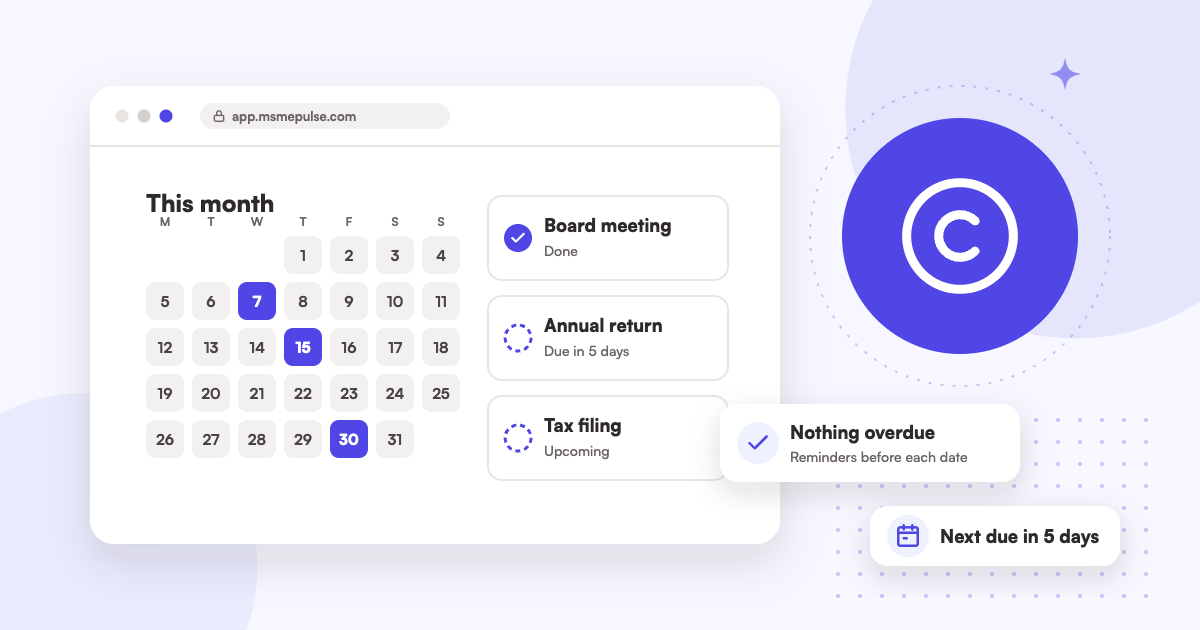
- reminders well before each deadline, not on it;
- the client's documents (power of attorney, logos, inventor assignments) on a checklist.
Review the docket weekly
A weekly review of everything due in the next 60 days is the single most effective safeguard. Two people should see it, not one.
Bill at each stage
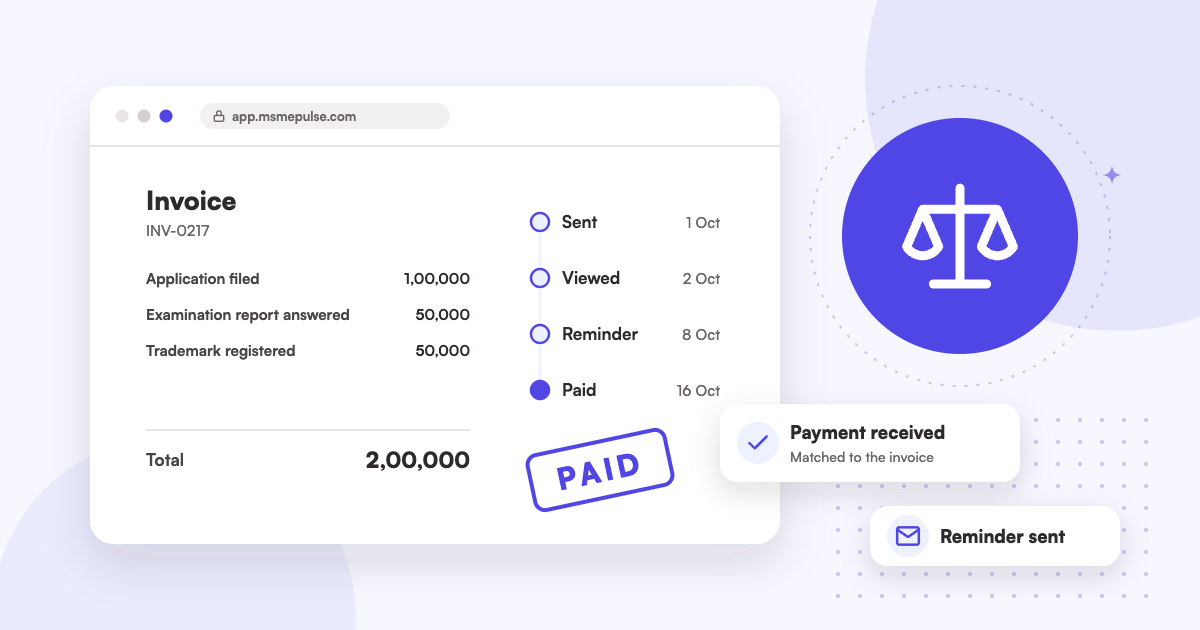
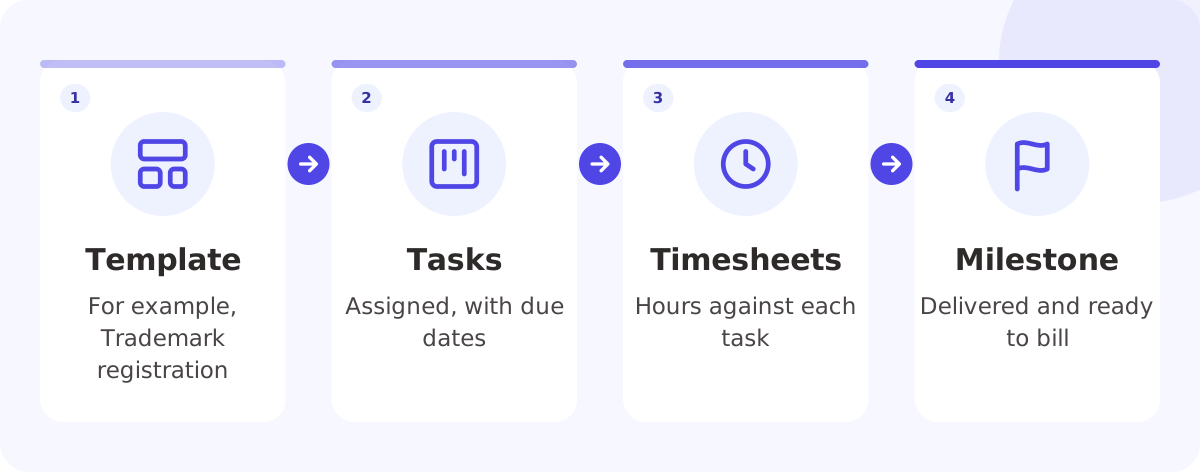
IP work suits staged fees: filing, examination response, registration. Invoice each stage when it's done. Waiting until registration, often a year or more, leaves you funding the client.
Keep clients informed
Clients forget about applications that run for years. A short update at each stage builds trust and reminds them of the value of your work.
How MSMEPulse helps
MSMEPulse includes trademark registration and patent application templates with each stage as a task and milestone, deadlines worked out from the start date, and client documents on a checklist. See every file's next deadline on one board, and invoice each stage when it's complete.