In a law firm billing by the hour, every unrecorded six minutes is revenue lost. A five-minute call, a quick review of a draft, an email answered late at night: individually trivial, together they add up to days each month.
Where time leaks
- Short tasks nobody bothers to record.
- Reconstruction at month-end, from memory and the calendar.
- Work recorded against the wrong matter, then written off.
- Write-downs to make a bill "look reasonable" when the time was never reviewed during the month.
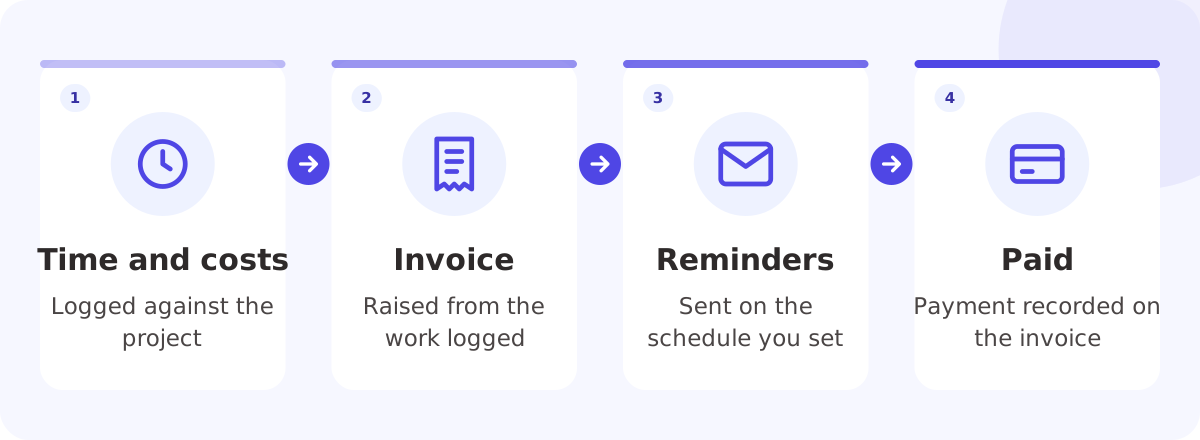
Record time as you go
- Use a timer for calls and meetings: start it when the call starts.
- Record short entries with a minimum unit your engagement terms allow, often six minutes.
- Write a clear narrative: "Reviewed and marked up clause 7 (indemnity) of the draft SPA; email to client with comments" tells the client what they're paying for.
Review weekly, not at billing time
A weekly review by the partner or matter lead catches:
- time on the wrong matter;
- work that's outside the agreed scope;
- matters running ahead of the estimate.
Raising a scope question in week two is a conversation. In month three, it's a dispute.
Match billing to the engagement
Not every matter is hourly:
- Fixed fee for defined work like a contract review or company incorporation.
- Stage fees for litigation: notice, pleadings, evidence, arguments.
- Retainers for ongoing advisory work, with clarity on what's included.
Even on fixed fees, record time. It tells you whether the fee is right next time.
Keep conflicts and engagement letters in order
Before opening a matter: a conflict check and a signed engagement letter. Make both steps part of every new matter, not something done "later".
How MSMEPulse helps
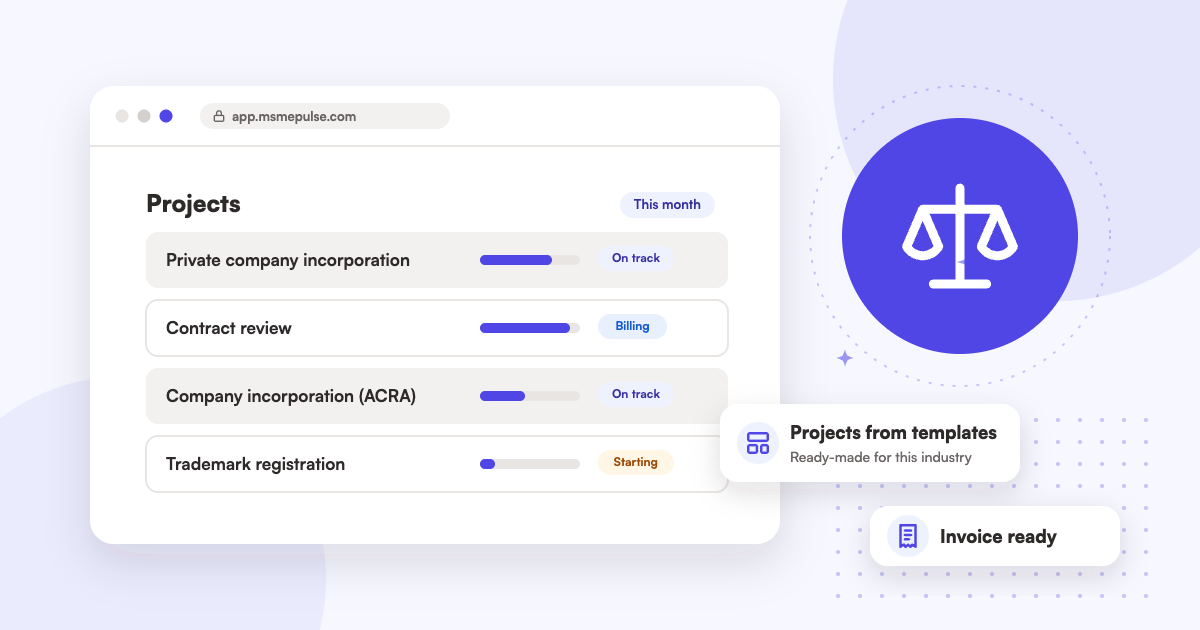
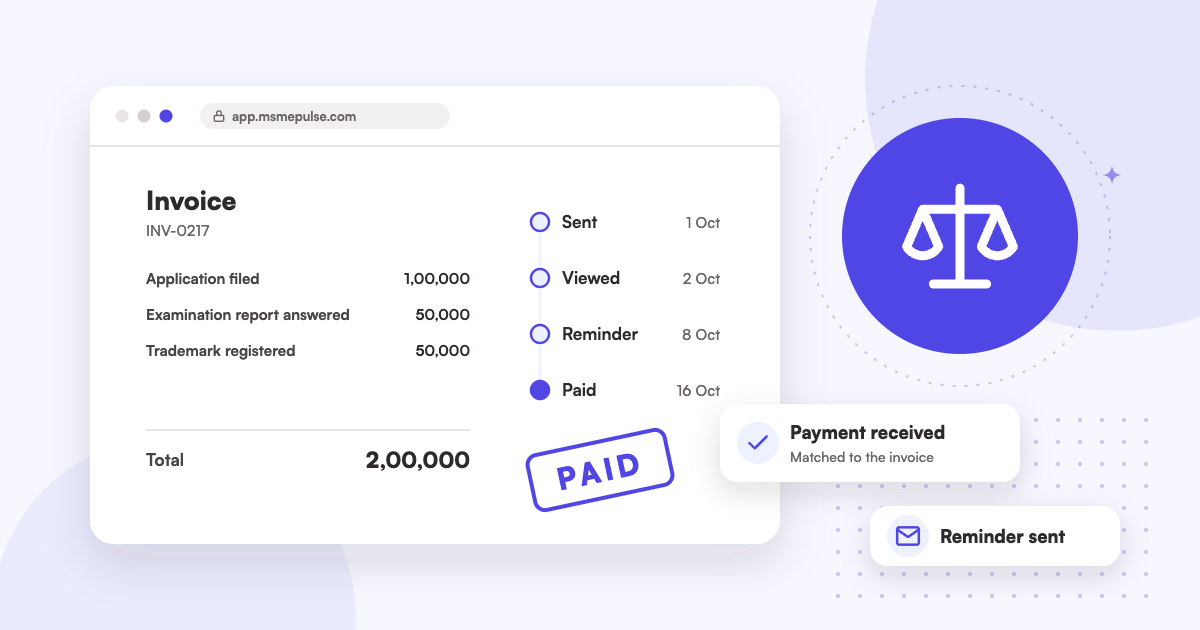
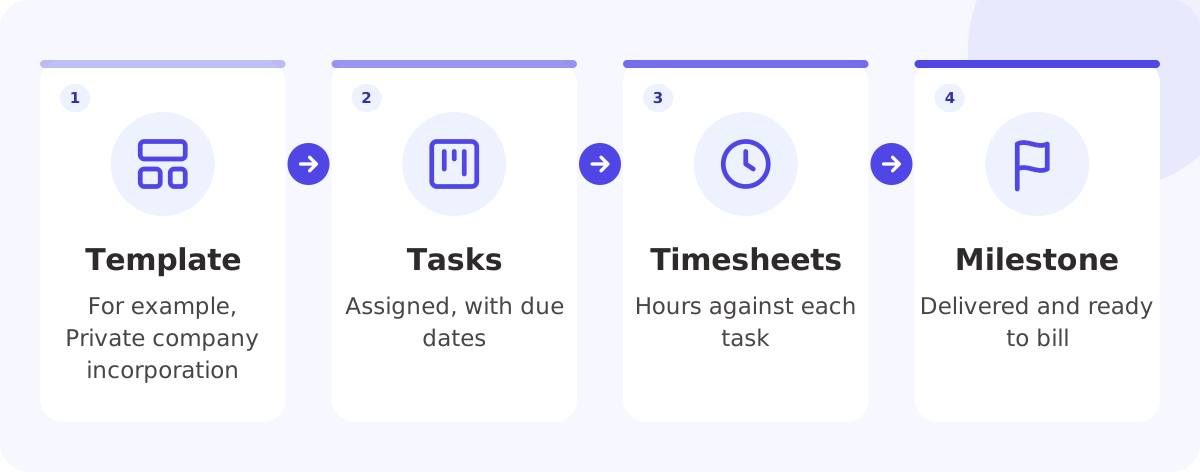
MSMEPulse gives each matter its own project with tasks, a timer and a weekly timesheet. Time is reviewed and approved weekly, and approved time becomes invoice lines with your narrative in one step. Templates for contract review, litigation matters, property title due diligence and trademark registration include the steps and the client documents each needs.