For a Singapore accounting and corporate secretarial firm, every client's financial year-end starts a chain of deadlines. With clients on different year-ends, the "season" never quite ends.
This is general guidance for private companies. Exemptions and deadlines depend on each company's circumstances. Check the current requirements with ACRA and IRAS.
The chain of deadlines
For a typical private company, counted from the financial year-end:
- Within 3 months: Estimated Chargeable Income (ECI) to IRAS, unless the company qualifies for the waiver.
- Within 6 months: AGM, where one is required. Private companies can dispense with holding an AGM in some circumstances.
- Within 7 months: annual return filed with ACRA.
- By 30 November of the following year: corporate income tax return (Form C, Form C-S or Form C-S Lite).
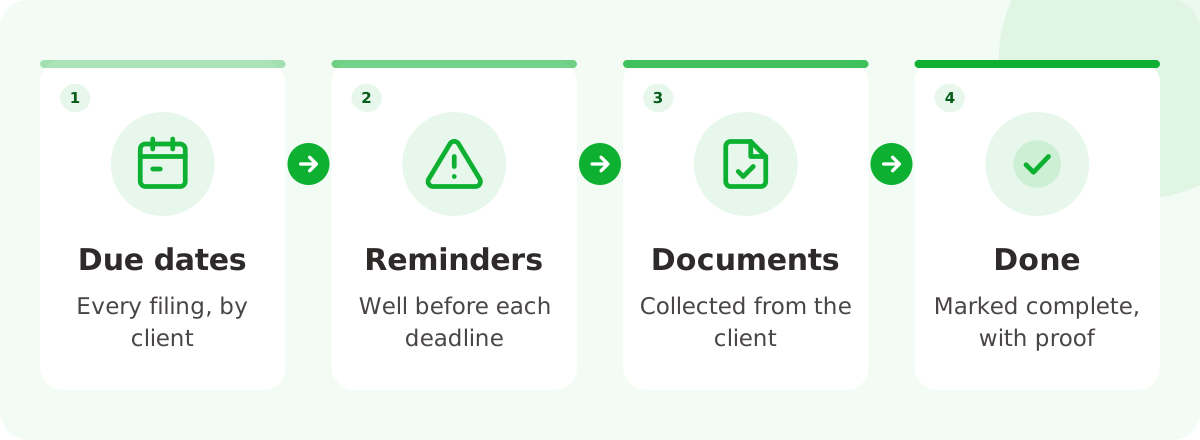
Organise by year-end, not by client
Group clients by financial year-end and plan each group's work backwards from its deadlines:
- Books closed and adjustments posted.
- Financial statements drafted and reviewed.
- Directors' approval.
- AGM held or dispensed with, and resolutions recorded.
- Annual return filed.
- Tax computation prepared and agreed.
- ECI and tax return filed.
Collect information early
Late information is the main cause of last-minute work. For each client, request well before the year-end:
- bank statements and confirmations;
- details of loans, fixed asset additions and disposals;
- shareholder and director changes during the year;
- anything unusual: new subsidiaries, large contracts, grants received.
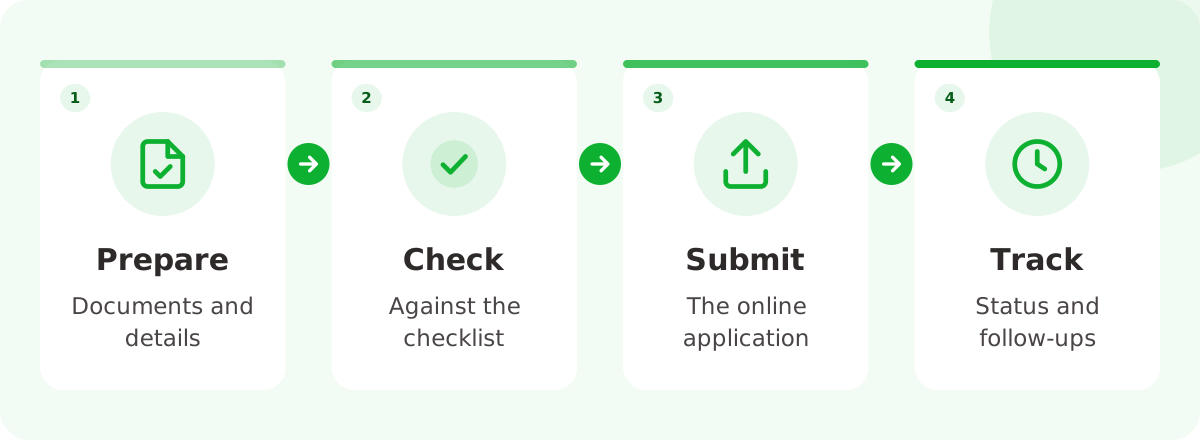
Keep the registers current
Registers of members, directors and registrable controllers must be kept up to date. Update them when changes happen, not at year-end.
Price recurring work fairly
Annual filing and tax work is usually a fixed fee. Track time per client: companies grow, and a fee set three years ago may no longer cover the work.
How MSMEPulse helps
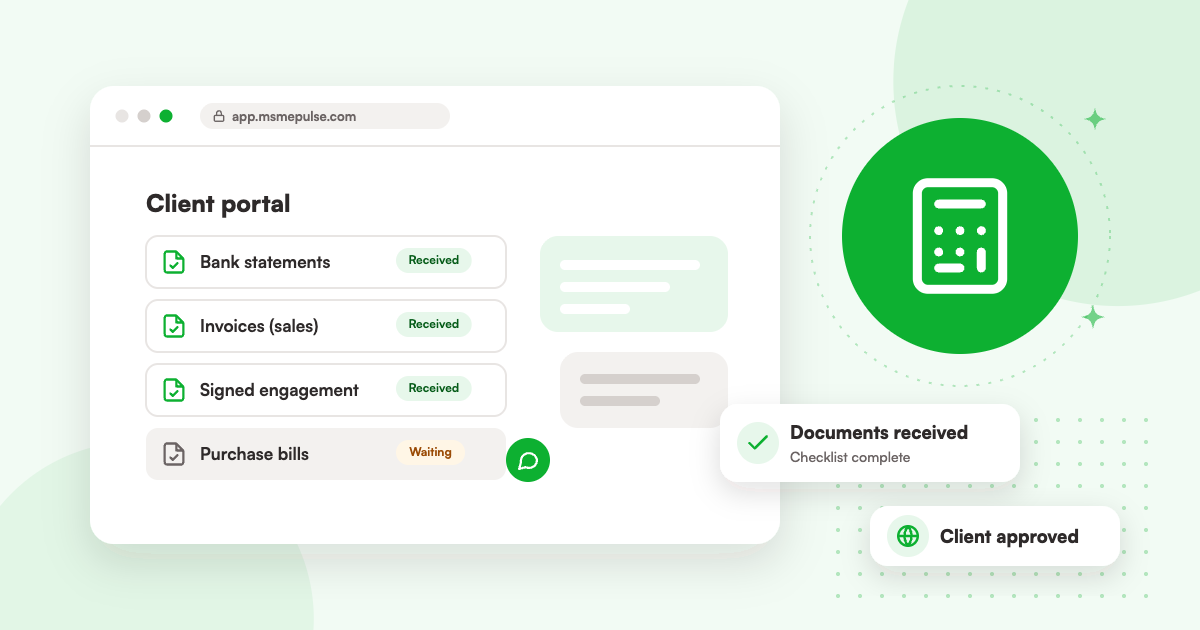
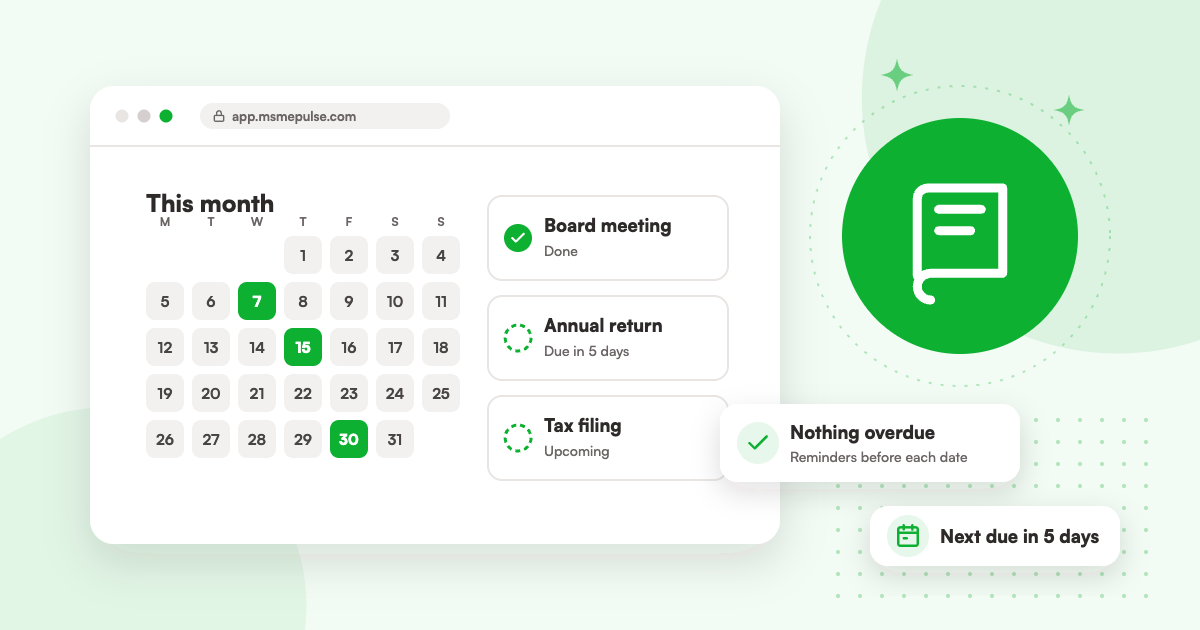
MSMEPulse includes templates for annual filing (ACRA) and AGM, corporate income tax returns, GST F5 returns, monthly bookkeeping and company incorporation, each with tasks, deadlines and a document checklist clients complete in their portal. See every client's progress on one board, track time against fixed fees, and invoice in SGD with the right GST treatment.